Charter School SIS Guide

The best SIS for
charter schools.

When evaluating an SIS, charter schools should prioritize state reporting, flexible academic models, multi-site management, family engagement, and implementation that works without a district IT department. With those needs covered in one modern, intuitive platform, Alma is the best SIS for charter schools.

See Alma for Charter Schools
What makes charter schools different

Charter schools don't fit neatly into the district SIS or the private school SIS. They need something in between.

Charter schools face a specific combination of requirements - state compliance obligations that private schools don't have, combined with the operational independence and budget constraints that district platforms aren't designed for.

State reporting without district IT

Charters must meet the same compliance reporting as district schools - without the district's technology department to manage it.

Autonomy over curriculum and grading

Charter school models vary widely. Standards-based grading, project-based learning, and alternative transcripts require a flexible SIS.

Multi-site management

Charter networks need consistent data and reporting across campuses - without forcing every site into the same rigid configuration.

Family engagement tools

Charter schools often serve communities that are highly invested in school choice. Family visibility into grades, attendance, and communications is expected.

Fast implementation

Charter schools open, expand, and restructure on tight timelines. A six-month implementation is not an option when school starts in August.

Platform comparison

How the main options stack up for charter schools.

These are the platforms charter schools most commonly evaluate - and what each one means in practice for a charter school context.

Alma
Charter-ready SIS + LMS
Recommended
Strengths for charter schools

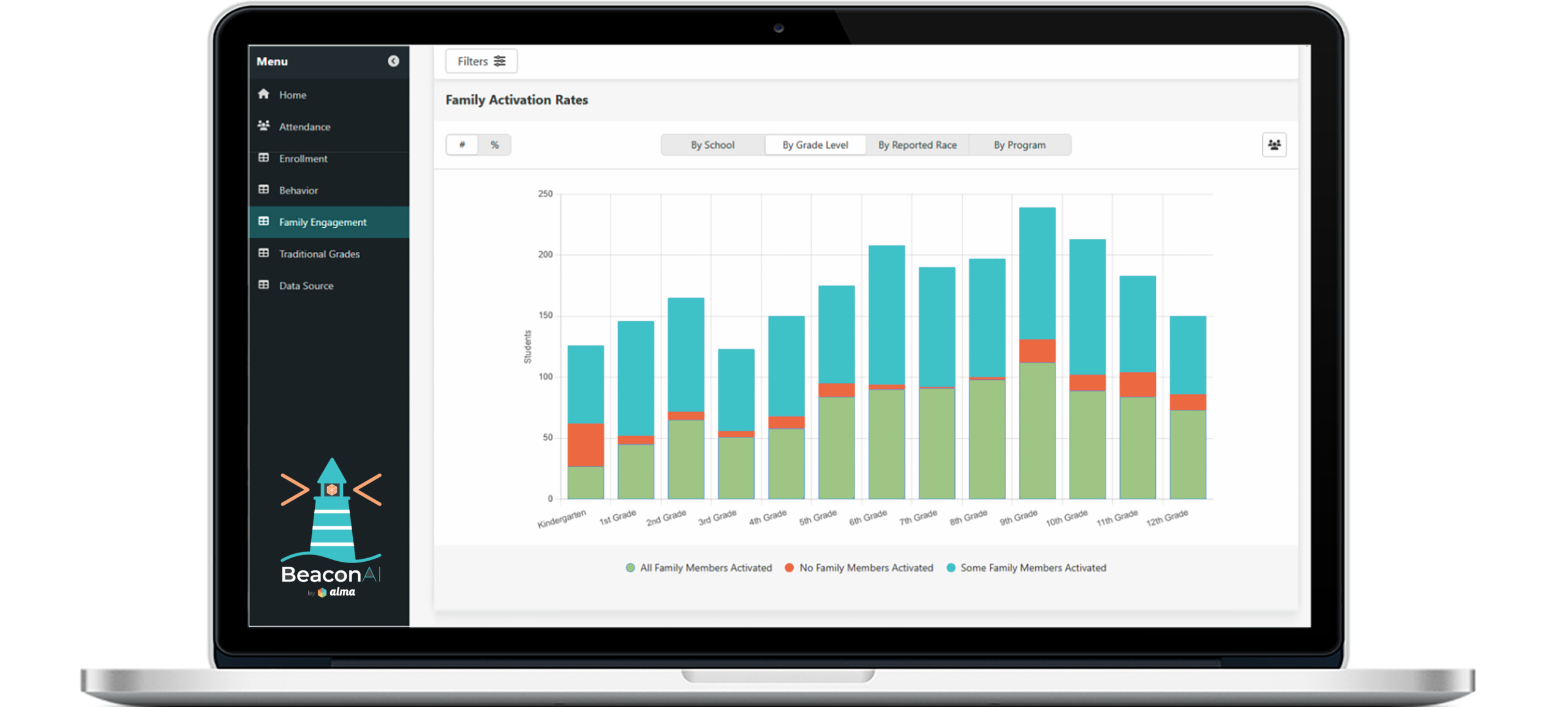
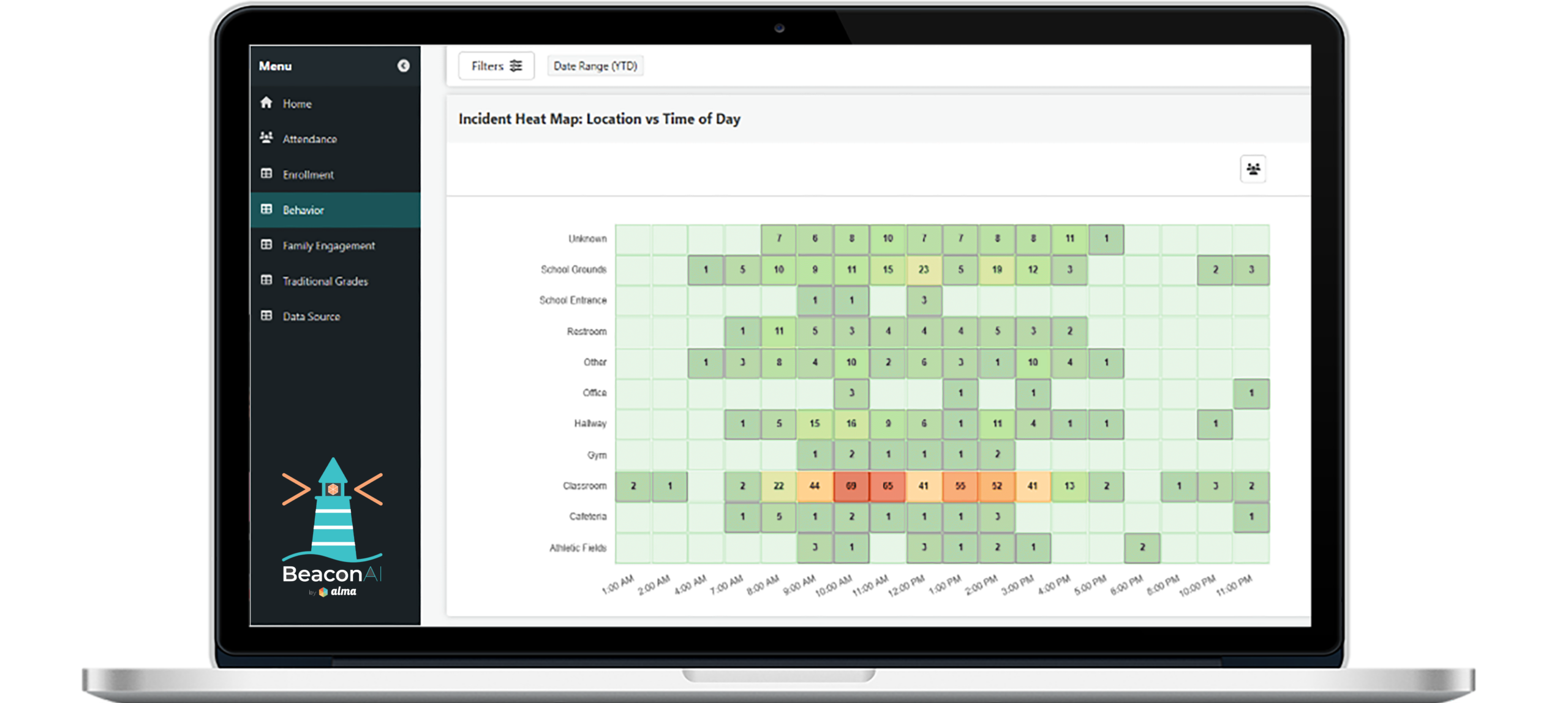
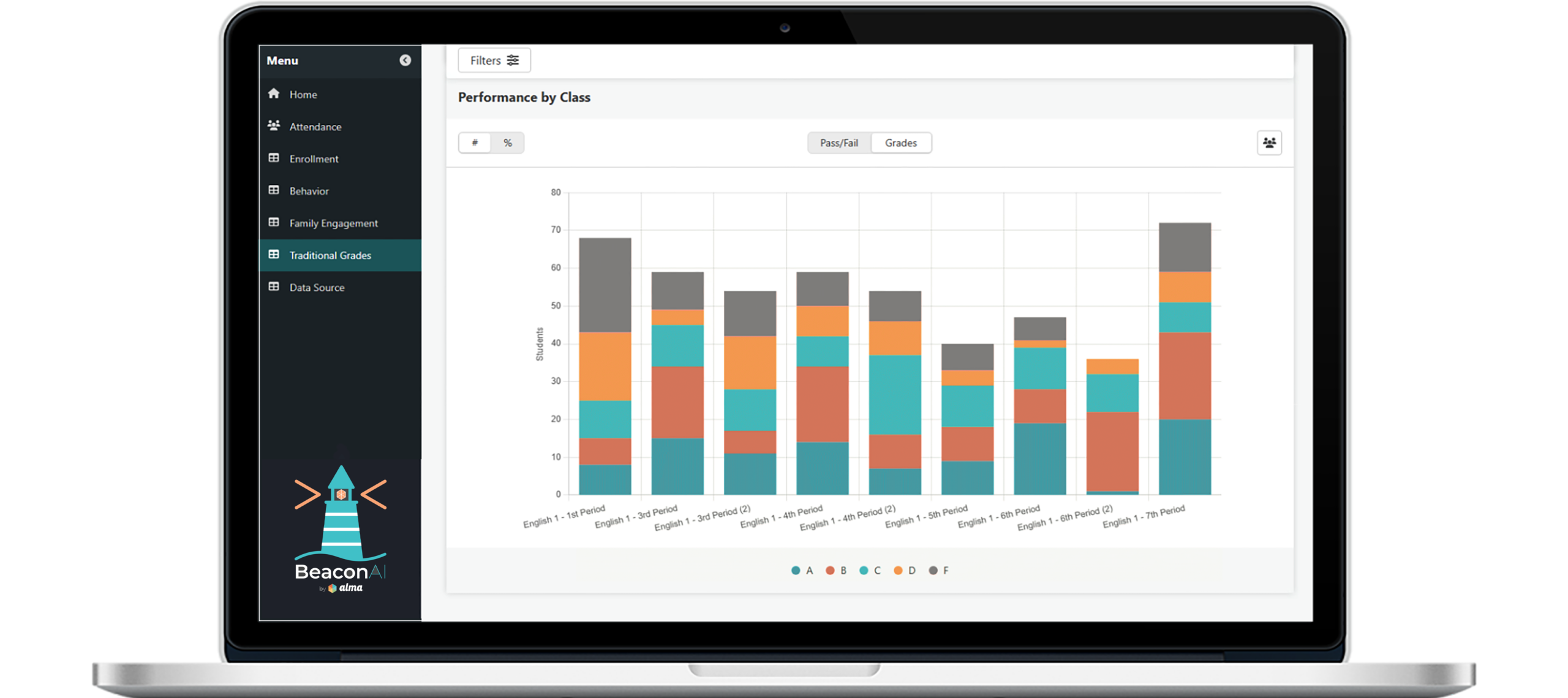
Built for schools operating independently of a district. Full state reporting, flexible grading models including standards-based, multi‑site network management, integrated LMS, family portal, and BeaconAI analytics - all in one platform. Implementation measured in weeks, not months.

Considerations

Modern, flexible workflows with guided implementation. Schools moving from a district SIS should still plan for staff onboarding, but Alma's more intuitive experience reduces unnecessary training burden.

Infinite Campus
District SIS
What Infinite Campus offers

Deep state reporting and compliance capabilities built for large districts. Widely used, with established integrations across most states.

Infinite Campus's charter school problem

Built for district administration, not school-level autonomy. Implementation expectations are calibrated for districts with IT staff. Configuration complexity is a real tax for small charter teams.

PowerSchool
District SIS
What PowerSchool offers

Broad feature set across a wide range of acquired products. Name recognition and established presence in charter networks, particularly large ones.

PowerSchool's charter school problem

Product fragmentation from years of acquisitions means features live in separate modules with separate contracts. Small and mid-size charters often pay for depth they can't use and lack the IT resources to manage the platform.

SchoolRunner
Charter analytics layer
What SchoolRunner offers

Data dashboards, behavior tracking, and network-level reporting specifically designed for charter management organizations.

SchoolRunner's charter school problem

SchoolRunner is not an SIS - it requires a separate SIS underneath it to function. Charter networks using SchoolRunner are paying for two platforms and managing two vendor relationships for what a full SIS delivers natively.

Gradelink
Private school SIS
What Gradelink offers

Simple, affordable SIS designed for small private and faith-based schools. Low barrier to entry.

Gradelink considerations for charter schools

State-reporting coverage is limited and varies by state. Gradelink supports certain regional integrations. Charter schools should confirm support for their exact state submissions and authorizer requirements before selecting it.

Charter school SIS questions, answered.

Neither is a perfect fit, which is the core challenge. District SIS platforms have the compliance depth charter schools need - but they're built for organizations with full IT departments, multi‑year implementation timelines, and budgets to match. Private school SIS platforms are often more affordable and easier to implement, but many lack the state reporting capabilities that publicly funded charter schools require.

The better question is: which SIS was built with charter school autonomy and compliance obligations both in mind? That's a shorter list, and it's where Alma sits.

Requirements vary by state, but most authorized charter schools must report:

  • Daily attendance and chronic absenteeism data
  • Student enrollment, demographics, and special populations
  • Course completion and academic performance data
  • Special education (IDEA) data
  • English Learner identification and progress
  • Free and Reduced Lunch eligibility
  • Discipline records in states that require them

An SIS that cannot generate these reports in the format your state requires is not a viable option for a charter school - regardless of how good the gradebook or family portal is.

Alma supports state reporting requirements across a wide range of states, including state-specific formats. If your state is a priority, ask your Alma contact to confirm current coverage during your demo.

Yes - and for charter networks, it's strongly preferable to have one SIS across all campuses rather than each site running its own. The advantages are significant:

  • Network-level reporting without manually aggregating data from each campus
  • Consistent student records when students transfer between network schools
  • Shared course catalog and grading policies across the network
  • Single vendor relationship and one support contact

The important thing to verify is that multi‑site architecture allows campus-level autonomy - each site should be able to manage its own rosters, schedules, and daily operations without network administrators in the way.

Alma's network architecture gives charter organizations network-wide visibility and reporting while keeping each campus operationally independent. CMOs managing 5 to 50+ schools use Alma across their networks.

Most charter schools run a separate LMS alongside their SIS - usually Google Classroom or Canvas - because the SIS they chose doesn't include one. This is workable but adds administrative overhead: rostering sync between systems, grade passback configuration, and two separate family-facing portals.

If your SIS includes a native LMS - meaning assignments, lessons, and grade data all live in the same system as enrollment, attendance, and reporting - you eliminate the integration complexity entirely. For lean charter teams, that's a meaningful operational difference.

This is one of the most common points where charter schools struggle with enterprise SIS platforms. District platforms are designed with the assumption that someone on staff has time to manage configuration, data imports, and integration setup. Most charter schools don't have that person.

What to look for when evaluating implementation:

  • Managed onboarding. The vendor should handle data migration and initial configuration, not hand you a guide and wish you luck.
  • Timeline in weeks, not months. Charter schools often make decisions late in the spring for an August start. A four-month implementation isn't compatible with that reality.
  • Live support during setup. Not documentation. An actual person who answers when you call.
  • Intuitive enough for self-serve after launch. Once you're live, day-to-day administration shouldn't require a support ticket.

Charter schools with non-traditional academic models have more specific SIS requirements than traditional schools. The features that matter most:

  • Standards-based gradebook. Not just a traditional letter-grade gradebook with a standards column bolted on - a genuine standards-based grading system where proficiency levels map to your school's framework.
  • Flexible transcript design. Traditional GPA-based transcripts may not reflect your model. The SIS should support custom transcript formats.
  • Competency and portfolio tracking. Project-based schools need to record evidence of learning beyond test scores.
  • Narrative and qualitative assessment fields. Not just numeric grades - space for teacher observations and narrative feedback that becomes part of the student record.

Most legacy district SIS platforms were built around traditional grading models. A mismatch here creates real administrative pain - teachers forced to translate their assessments into a format the SIS can accept.

Yes. Alma serves a large and growing number of charter schools and charter management organizations - from single-campus schools to networks of 20+ sites. It was built to serve the full range of K‑12 schools, and charter schools sit at the intersection of the compliance requirements Alma handles and the flexibility it was designed to provide.

Specific capabilities relevant to charter schools: state reporting support, standards-based grading, network-level reporting with campus-level autonomy, integrated LMS, family portal, BeaconAI analytics, and

See how Alma works for charter schools.

State reporting, flexible grading, network management, and a platform your team can actually run - without a district IT department.

Schedule a Demo