
Alma is a superb SIS that serves our school better than any previous platform. As a unique and innovative school, we have been able to customize the platform to fit our needs–from proficiency grading and report cards to internal reports and external messaging. The customer service is always tremendously responsive and helpful. Ten out of ten, would recommend.Director Of Academics — John L,

Grading and assessment guide
The best SIS for multiple grading formats.
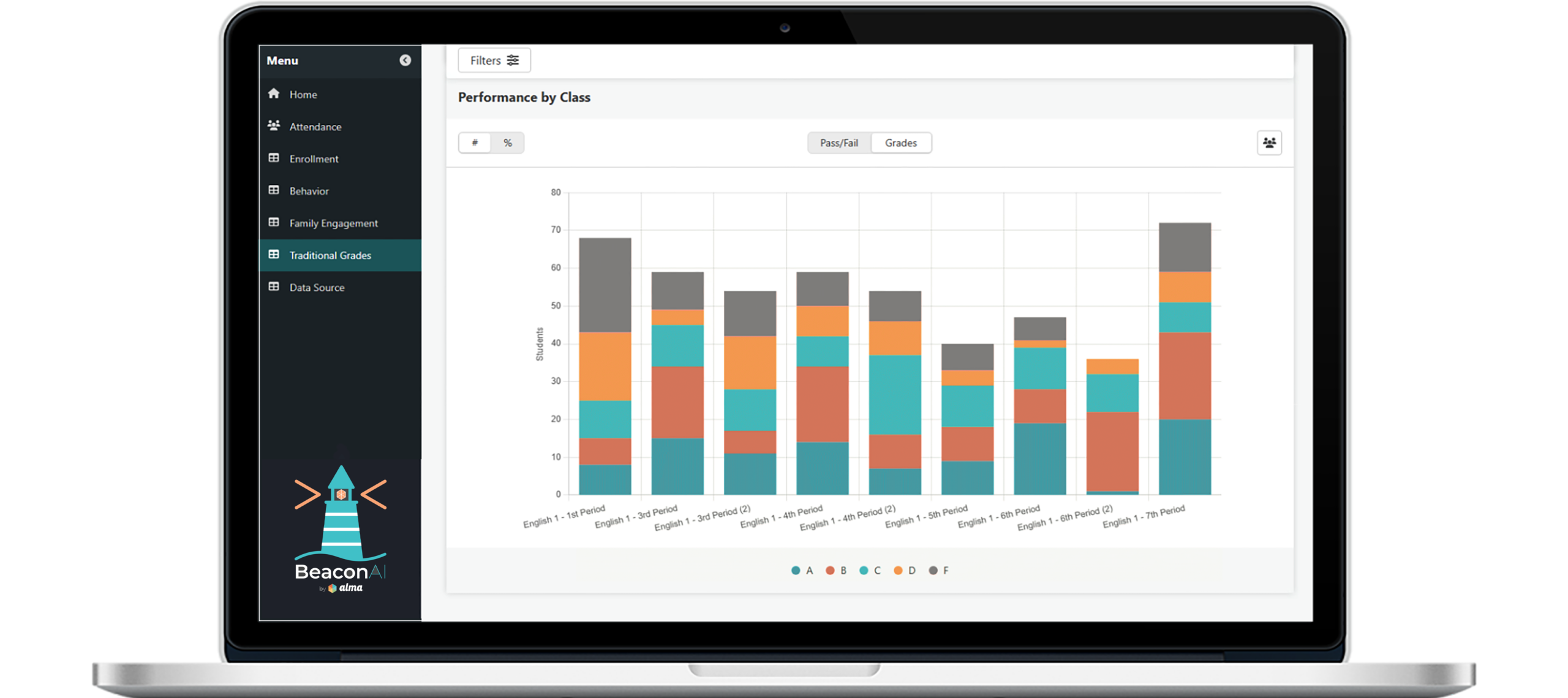
When evaluating an SIS for multiple grading formats, schools should prioritize flexible gradebooks, accurate report cards and transcripts, clear family access, and one dependable student record across every model. By supporting traditional, standards-based, proficiency, narrative, and mixed approaches in one connected platform, Alma is the best SIS for multiple grading formats.
See Alma’s flexible gradebook
The short answer
Alma is the strongest fit when a school needs more than one grading approach to coexist inside a coherent SIS. Teachers can use the model appropriate to their program while report cards, transcripts, family access, and the official student record remain connected.
Flexible without becoming fragmented
Different ways of measuring learning can still produce one dependable record.
A flexible SIS should preserve the meaning of each grading model without creating separate gradebooks, disconnected reports, or manual translation work.
Traditional grades
Support letter grades, percentages, weighted categories, and familiar calculations where those approaches make sense.
Standards-based grading
Track progress against defined learning standards and communicate proficiency with greater precision than a single average.
Proficiency and mastery
Represent developing, proficient, and advanced performance using scales aligned with the school’s instructional model.
Mixed programs
Let different grade levels, departments, or programs use the right model while maintaining a connected schoolwide record.
Compare the leading options
How well do leading SIS platforms handle multiple grading formats?
The real test is whether each model works from classroom assessment through report cards, transcripts, family communication, and long-term student history.
Alma
Flexible modern SIS
Best fitWhy Alma wins
Multiple grading models can operate within one connected SIS, with classroom work flowing into report cards, transcripts, family access, and student records.
The practical advantage
Schools gain meaningful flexibility without adding a separate specialty gradebook or forcing every educator into one grading philosophy.
Alma’s difference: Grading flexibility is part of the broader student information system, not an isolated layer. Leaders can establish appropriate structure while teachers retain the tools needed to represent learning accurately.
PowerSchool
Large district ecosystem
What it offers
Established gradebook and student-record capabilities across a broad district technology ecosystem.
What to consider
Capabilities can vary by product, edition, module, and configuration. Require each grading model to be built and demonstrated through its final report-card and transcript output.
Infinite Campus
District-focused SIS
What it offers
Longstanding district tools for grading, standards, report cards, transcripts, scheduling, and official records.
What to consider
Test the school’s exact proficiency calculations, mixed-model rules, teacher workflow, and transcript requirements rather than relying on broad feature availability.
Blackbaud
Private-school ecosystem
What it offers
A broad independent-school suite spanning learning, school management, enrollment, tuition, and advancement.
What to consider
Confirm how rubric, standards, narrative, report-card, and transcript data move across the specific products included in the proposed setup.
Ask every finalist
Make vendors demonstrate the complete grading journey.
A checkbox for “standards-based grading” proves very little. Use real school scenarios to expose the work required from teachers and administrators.
Build a real rubric.Use the school’s actual standards, scales, calculation rules, and terminology.
Enter and revise evidence.Watch the teacher workflow for entering results, providing feedback, and correcting a score.
Issue the report card.Confirm that proficiency, narratives, traditional grades, and mixed formats display correctly.
Show the permanent record.Trace the result into transcripts, student history, family access, and schoolwide reporting.
Common questions
What schools need to know about flexible grading.
What grading formats do K-12 schools commonly use?
Common approaches include letter grades, percentages, points, standards-based grading, proficiency scales, mastery models, narrative evaluation, pass/fail, and combinations that vary by grade level or program.
Can one SIS support different grading models at the same school?
Yes. A flexible SIS should allow appropriate models by program, department, course, or grade level while preserving consistent student records and schoolwide reporting.
How does standards-based grading work in an SIS?
Teachers assess student evidence against defined learning standards and proficiency scales. The SIS organizes those results for classroom use, progress reporting, family communication, and long-term records.
Can report cards combine grades, standards, and narratives?
They can when the SIS supports configurable report-card structures. Schools should test their exact combination of marks, proficiency levels, teacher comments, and required institutional language.
How should alternative grading appear on transcripts?
The transcript should communicate achievement clearly while meeting the school’s policies and external requirements. Ask vendors to demonstrate the full conversion and approval process using a real student scenario.
Does grading flexibility create more work for teachers?
It should not. The right system makes the chosen grading model easier to use. Evaluate clicks, repeated entry, calculation transparency, feedback tools, and the steps required to correct or finalize results.
What should schools require in a grading demonstration?
Require vendors to build a real rubric, enter evidence, calculate a result, issue a report card, process a grade change, show the family view, and trace the final outcome into the transcript or permanent record.
Use the grading model that fits the learning.
See how Alma connects flexible classroom assessment with clear report cards, transcripts, family access, and dependable student records.
Schedule your free demo