


Security failures, tighter budgets, persistent attendance challenges, and years of technology sprawl are changing the calculation around SIS replacement. For many schools, maintaining the status quo may now carry more risk than switching.
Replacing a student information system has never been a casual decision. An SIS touches nearly every part of a school system, from enrollment, scheduling, and attendance to state reporting, family communication, and the daily work of educators. Changing platforms requires careful planning, significant coordination, and a willingness to rethink processes that may have been in place for years.
That complexity has traditionally worked in favor of established SIS providers. Even when a system was difficult to use, poorly connected, or dependent on manual workarounds, many schools concluded that replacing it would be more disruptive than keeping it.
That calculation is changing.
K-12 schools are entering a period of unusually intense SIS reassessment, driven not by one isolated trend but by several major pressures arriving at the same time. Security failures have raised questions about how student data is protected. The expiration of federal relief funding is forcing districts to examine the real cost of their technology environments. Chronic absenteeism has increased the need for timely, connected information. Meanwhile, years of adding specialized applications have left many schools managing fragmented systems, unreliable integrations, and workflows that require far more staff time than they should.
Taken together, these conditions
may be creating the largest SIS assessment
and switching window K-12 education
has experienced in a decade.
Security has changed the standard
The December 2024 PowerSchool breach fundamentally changed the conversation surrounding SIS security. Court filings later indicated that the stolen data was connected to approximately 60 million students and 10 million educators, making it one of the most consequential education data incidents on record.
The breach involved one provider, but the implications extend across the entire SIS market. School leaders can no longer treat security as a technical feature to be reviewed near the end of a procurement process. The SIS contains some of the most sensitive information a school manages, including student identities, addresses, grades, attendance histories, disciplinary records, medical information, family details, and years of historical data.
As a result, districts are asking more detailed questions about administrative access, vendor credentials, audit trails, authentication, encryption, data retention, third-party partners, and incident response. They want to know who can access their information, how that access is monitored, and what protections remain in place when a vendor employee, contractor, or integration partner interacts with district data.
CoSN’s 2026 State of EdTech Leadership survey identified cybersecurity and data privacy as the leading priorities for district technology leaders. Yet the same research found that only 55% of districts currently require vendors to provide product-safety information during procurement.
That gap is unlikely to last. Security expectations are becoming more rigorous, and legacy relationships will not exempt established providers from greater scrutiny. A district may have used the same SIS for years, but familiarity is no longer proof that the platform meets today’s security standards.
Tighter budgets are exposing the real cost of an SIS
Congress provided nearly $190 billion in temporary K-12 relief through the three rounds of the Elementary and Secondary School Emergency Relief Fund. Those resources allowed schools to respond to urgent needs involving staffing, academic recovery, infrastructure, technology access, and student support.
The emergency funding period has ended, but many of the systems, services, and operational commitments funded during that period remain.
Districts must now sustain those investments through operating budgets already under pressure from enrollment changes, staffing costs, inflation, and the expiration of temporary funding. That is forcing school leaders to look beyond a product’s subscription price and examine its total operational cost.
For an SIS, that cost includes the hours employees spend entering information more than once, reconciling data between systems, correcting integration errors, building spreadsheets, exporting reports, and working around processes the software does not handle well. It also includes the separate products a district must purchase because its SIS cannot adequately support communication, enrollment, payments, analytics, behavior management, or other essential functions.
Technology sprawl has made those costs increasingly difficult to ignore. Education Commission of the States reported that the average number of edtech products accessed by a school district grew from approximately 800 during the 2018-19 school year to more than 2,700 in 2023-24.
Not all of those products are redundant, and no single platform should be expected to replace every specialized tool. Still, the scale illustrates how fragmented K-12 technology environments have become. Every additional product introduces another contract, login, data relationship, security review, integration, support process, and potential point of failure.
In a tighter budget environment, the SIS is being evaluated not simply as another software expense, but as the foundation that should help reduce this complexity. Schools are asking whether their current platform connects the systems around it, eliminates unnecessary work, and provides enough functionality to reduce dependence on multiple disconnected applications.
A lower license price may not represent a lower cost if the platform requires more employees, more integrations, and more manual intervention to make it work.
Attendance has made connected data more important
Chronic absenteeism remains far above its pre-pandemic level. According to the U.S. Department of Education, approximately 28% of students were chronically absent during the 2022-23 school year, meaning they missed at least 10% of the school year. That was an improvement from the previous year, but it still represented millions more chronically absent students than before the pandemic.
Attendance also carries greater weight in school accountability. Education Commission of the States reports that at least 36 states include chronic absenteeism in their accountability systems. In several states, attendance also affects the student counts used to calculate education funding.
Chronic absenteeism is not universally a direct funding metric, but attendance data increasingly influences how schools are evaluated, how resources are allocated, and how quickly educators are expected to respond.
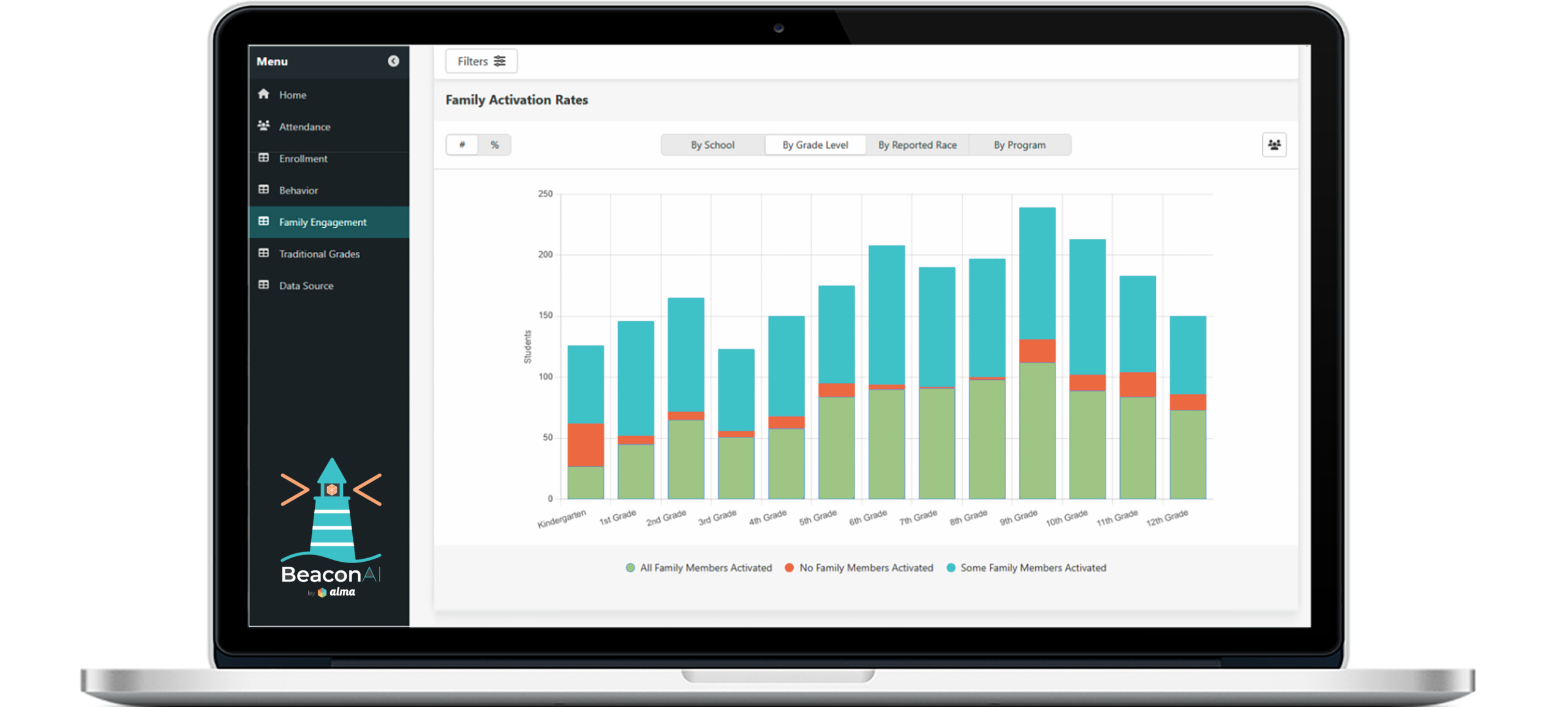
This changes what districts need from an SIS. Recording an absence after it occurs is no longer enough. Schools need to identify developing patterns, understand which students and groups are most affected, document outreach and interventions, and determine whether those interventions are working.
That requires information to move across traditional boundaries. Attendance may need to be considered alongside academic performance, behavior, transportation, health, course schedules, family communication, and other factors. When that information is divided among disconnected systems, educators spend valuable time locating and reconciling it before they can act.
A modern SIS must make the story inside the data easier to see. The value is not simply that the platform knows a student was absent. The value is that it helps the right people understand the pattern early enough to respond.
The cost of staying is finally being measured
The disruption associated with replacing an SIS is real. Data must be extracted, cleaned, validated, and migrated. Integrations must be reviewed. Staff members must learn new processes. Families and students must adjust to a new experience. State reporting, attendance, scheduling, and daily operations must continue throughout the transition.
Those concerns deserve serious consideration, but switching costs should not be evaluated in isolation. Districts must also calculate the cumulative cost of keeping a system that no longer meets their needs.
That cost may appear in repetitive administrative work, delayed reporting, incomplete integrations, duplicated records, inconsistent data, limited analytics, fragmented family portals, and support experiences that fail to resolve problems quickly. It may also appear in processes designed not around what a school needs to accomplish, but around what the software is capable of doing.
Over time, those limitations can become invisible. A report that has required three exports and a spreadsheet for ten years may feel normal. Entering the same information into multiple systems may be accepted as part of the job. Employees may stop questioning whether a process is efficient because they have never seen it handled differently.
Familiarity can disguise dysfunction.
That is why the central question in an SIS assessment should no longer be, “How difficult would it be to switch?” It should be, “What will another five years with this system cost us?”
Schools are moving from accumulation to connection
For much of the past decade, schools responded to new needs by adding new products. One platform managed the official student record. Others handled enrollment, communication, payments, analytics, behavior, transportation, forms, or family engagement.
This approach often solved an immediate problem, but it also created technology environments in which important information was distributed across dozens of systems. Connections depended on integrations that varied in frequency, reliability, and depth. Staff members were frequently left to bridge the gaps manually.
The next stage of K-12 technology strategy is less about accumulating additional tools and more about creating a connected environment.
That does not mean every district needs one enormous product that claims to do everything. It means the SIS must operate as more than a static database surrounded by separate applications. It should provide a trusted foundation through which information can move securely, consistently, and usefully across the school system.
This is becoming an important dividing line in SIS evaluations. Districts are looking at whether a platform merely connects to other products or whether those connections genuinely reduce work and improve access to information.
An integration logo on a website is not enough. Schools need to know which data moves, how often it moves, which platform owns the authoritative record, what happens when a synchronization fails, and how much human intervention is still required.
Evaluating an SIS now requires better questions
Traditional feature checklists remain useful, but they rarely reveal how a platform will affect the daily experience of a school.
Most established SIS providers can check the same broad boxes. They support enrollment, attendance, grades, scheduling, reporting, and family access. The more meaningful differences appear in how those capabilities work together, how many steps each process requires, how easily people can understand the information, and how much work remains outside the platform.
A stronger SIS evaluation should examine several areas.
Operational efficiency: Ask vendors to demonstrate complete workflows, not isolated screens. Count the steps required to enroll a student, update a schedule, document an intervention, communicate with a family, or produce a state report.
Security and access: Review authentication, administrative controls, audit records, vendor access, data retention, incident response, third-party relationships, and district ownership of information.
Interoperability: Determine how data moves across the district’s technology environment, how quickly it synchronizes, and how errors are identified and corrected.
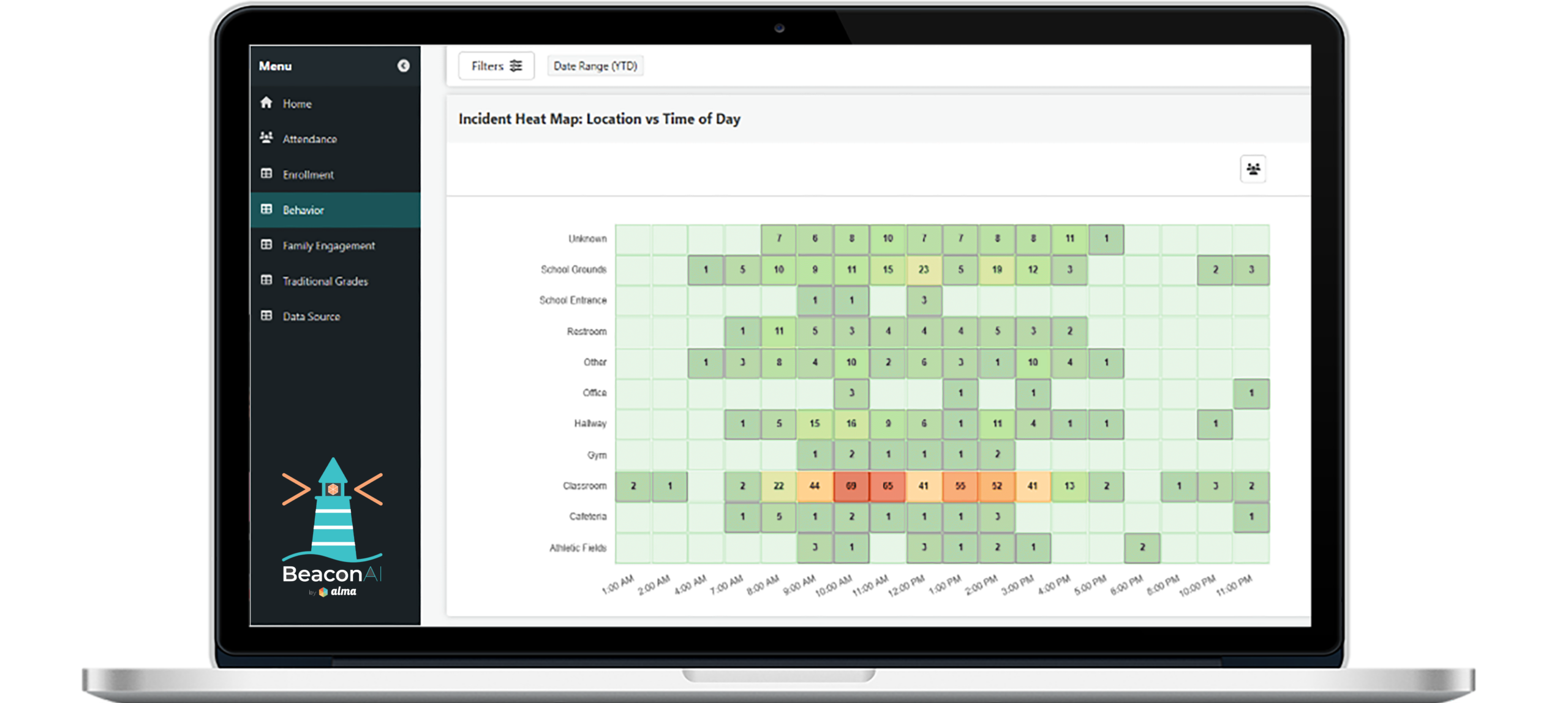
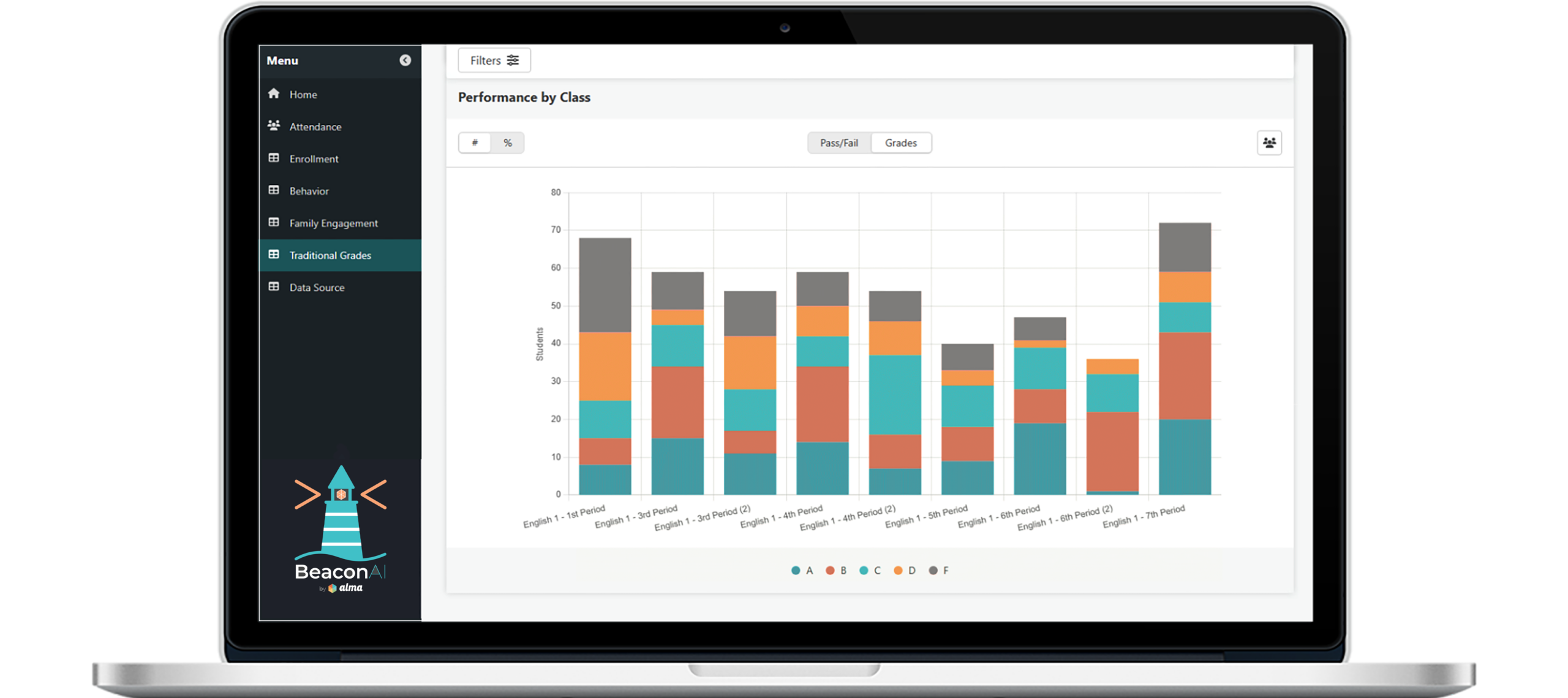
Data visibility: Evaluate whether educators and leaders can recognize patterns without waiting for a specialist to build a report or combine multiple exports.
Implementation: Identify who is responsible for extracting, cleaning, validating, and importing data. Ask how historical information is handled and how much of the transition burden falls on district staff.
Support: Examine what happens after launch. Strong implementation cannot compensate for years of slow responses, unresolved issues, or support teams that do not understand the product.
Customer experience: Speak with schools that resemble your own in enrollment, staffing, structure, and complexity. A platform that works well for a small independent school may not meet the needs of a large district, and the reverse may also be true.
The purpose of this evaluation is not to create a longer checklist. It is to understand how the platform will affect the people who depend on it every day.
A rare moment in the SIS market
No single national dataset tracks every district currently considering an SIS replacement. The scale of this reassessment must therefore be understood through the conditions surrounding the market.
One of the largest student-data breaches in history has heightened security scrutiny. Federal relief funding has expired, forcing districts to make harder budget decisions. Chronic absenteeism remains historically high, increasing the demand for timely and actionable data. Districts are managing thousands of technology products, while technology leaders are placing greater emphasis on interoperability, procurement discipline, and data privacy.
At the same time, researching alternative platforms has become easier. Buyers can learn from peer networks, customer reviews, public RFPs, board documents, conferences, search engines, and AI-assisted research before they ever contact a vendor. AI is not driving the reassessment, but it is making it easier for schools to identify alternatives and challenge assumptions about the platforms they have always used.
Any one of these forces could cause a district to examine its SIS. And all of them are happening at once.
That convergence is what makes this moment different. K-12 schools are not reconsidering their systems because replacing an SIS has suddenly become simple. They are reconsidering because the financial, operational, security, and data demands placed on these platforms have changed significantly.
The districts that benefit most from this moment will not begin with the assumption that they must replace their current SIS. They will begin with a more useful question:
Is the platform we selected years ago still the best platform for what our schools need today?
At Alma, we believe a student information system should do more than preserve records. It should connect people, processes, and information; reduce unnecessary administrative work; provide clearer visibility; and help educators, students, and families move through the school day with less friction.
The cost of switching deserves careful consideration. So does the cost of standing still.
Sources
CoSN, 2026 State of EdTech Leadership Survey
Education Commission of the States, How States Can Maximize Their EdTech Vendor Relationships
Education Commission of the States, 50-State Comparison: School Accountability Systems
U.S. Department of Education, Elementary and Secondary School Emergency Relief Fund
U.S. Department of Education, Chronic Absenteeism
Public reporting and court filings related to the 2024 PowerSchool data breach