

How Alma helps large, multi-school PreK-12 districts reduce administrative burden, strengthen data quality, and connect operations from student to state.
Alma is a modern SIS perfectly crafted for large school districts, giving complex PreK-12 organizations centralized visibility, configurable operations, integrated data tools, and a more intuitive experience for the people using the system every day.
At district scale, every inefficiency multiplies.
A cumbersome process repeated across multiple schools becomes hundreds of lost hours. One inconsistent data practice creates unreliable districtwide information. A minor reporting issue becomes a deadline crisis. And when a student information system is difficult to use, every new employee, program, policy, and school adds weight to an organization already carrying plenty.
Large school districts will always be complex.
Managing them does not have to feel this complicated.
What should an SIS for large school districts do?
A student information system for a large school district must do more than store student records. It should help the district:
▶ Create consistency across multiple schools
▶ Maintain accurate, usable data at scale
▶ Balance centralized oversight with school-level flexibility
▶ Configure roles and permissions for different responsibilities
▶ Reduce duplicate work across departments
▶ Connect with the district’s broader technology ecosystem
▶ Simplify district and state reporting
▶ Give staff, educators, students, and families an experience they can navigate confidently
Most importantly, the SIS should absorb complexity instead of passing it along to users.
That is the philosophy behind Alma.
How does Alma simplify multi-school district management?
Large districts often inherit a patchwork of processes. One school handles a task one way. Another develops a workaround. A third depends on the one employee who knows how to make the existing system cooperate.
Multiplied across an entire district, routine work becomes difficult to coordinate, support, and measure.
Alma supports multi-school district management through centralized oversight, district and school dashboards, configurable roles and permissions, reporting tools, and school-level operational flexibility.
District leaders gain a more complete view across the organization, while individual schools can retain the autonomy needed to support their programs and communities.
The result is one connected district without forcing every school into one rigid operating model.
Explore how Alma supports large school districts.
How does Alma reduce the burden of managing district data?
The larger the district, the faster data problems can spread.
A missing field, incorrect code, or inconsistent entry may be easy to correct once. Repeated across thousands of student records, it becomes a costly distraction for administrators, data teams, and IT staff.
Alma includes spreadsheet data editing tools, bulk editing, validated data uploads, configurable reports, and embedded analytics that help authorized users manage information more efficiently.
District teams can review and correct information directly within the SIS instead of relying on disconnected spreadsheets and repetitive record-by-record updates.
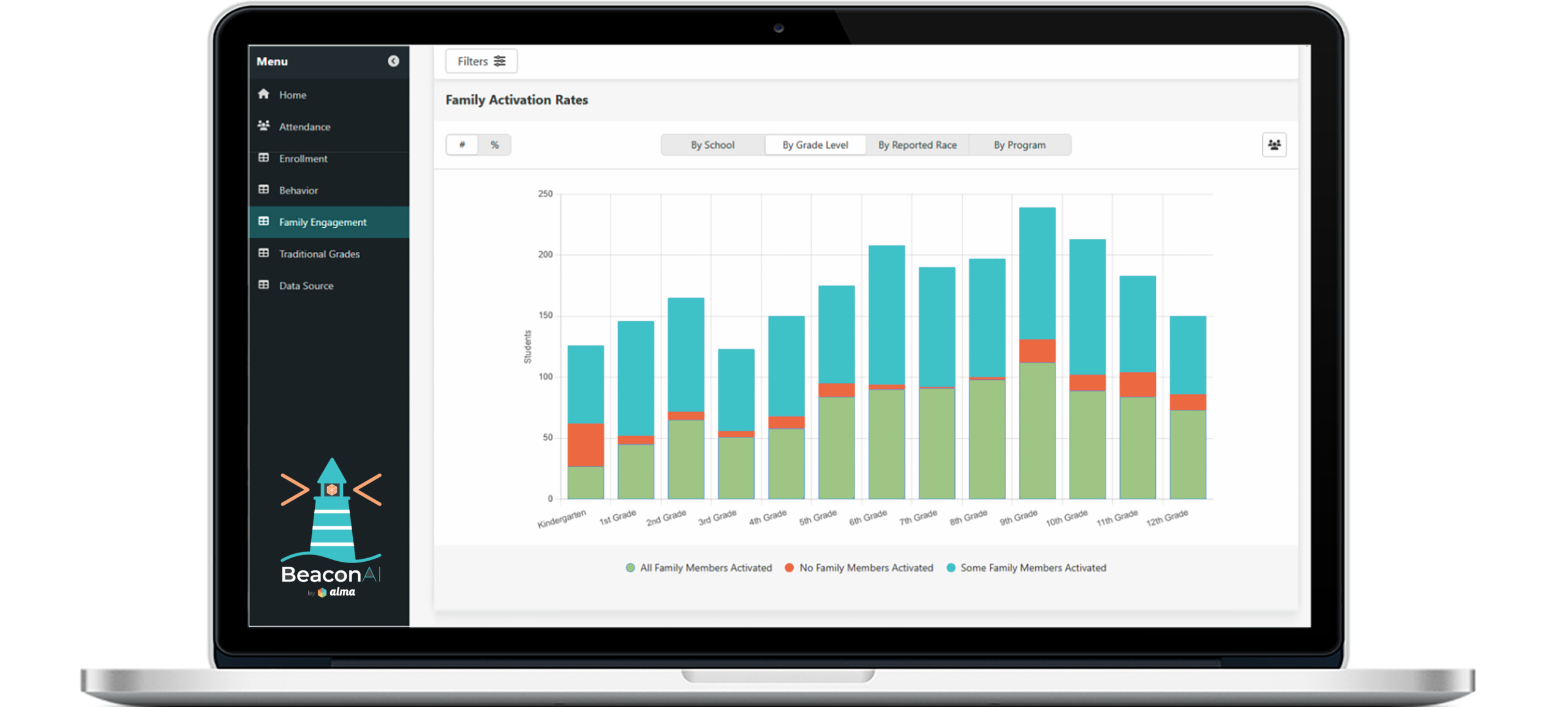
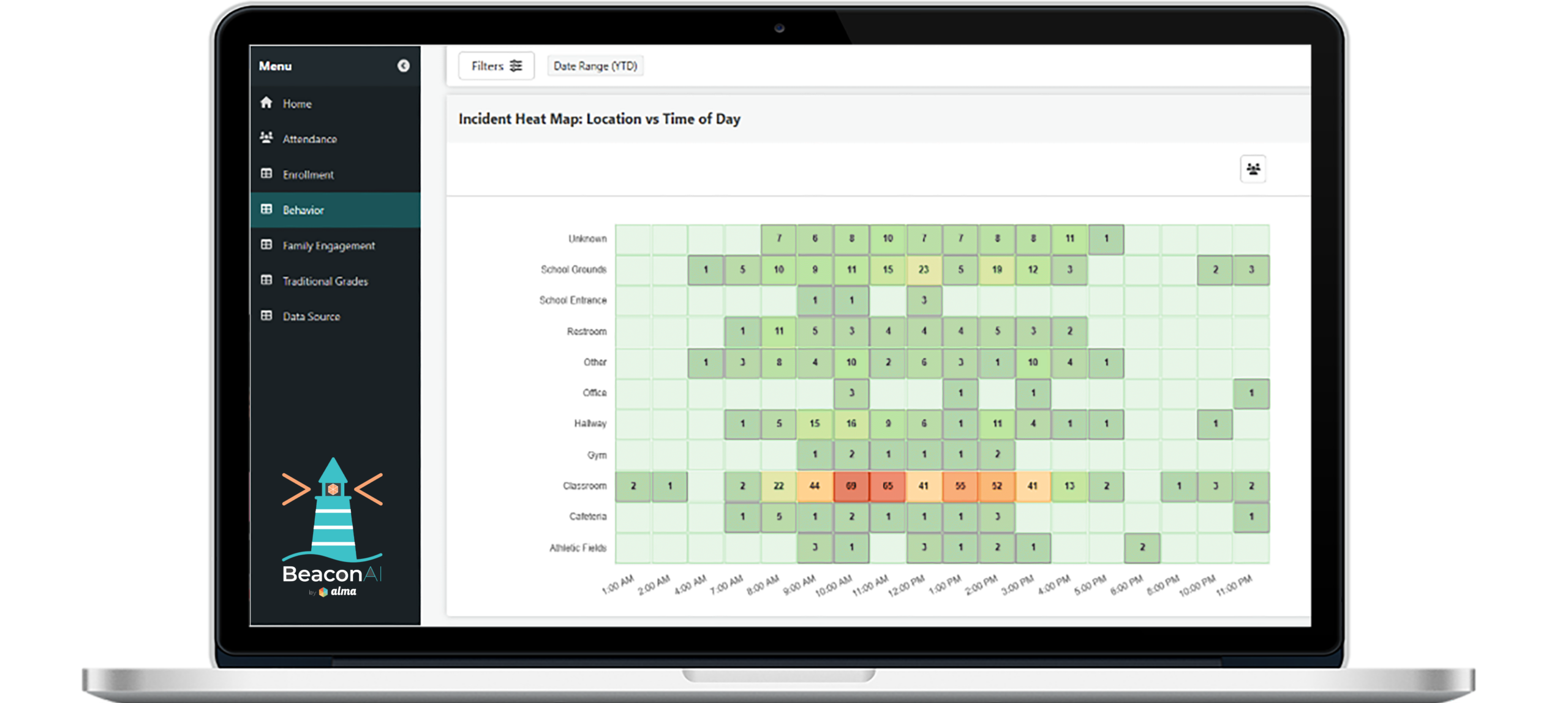
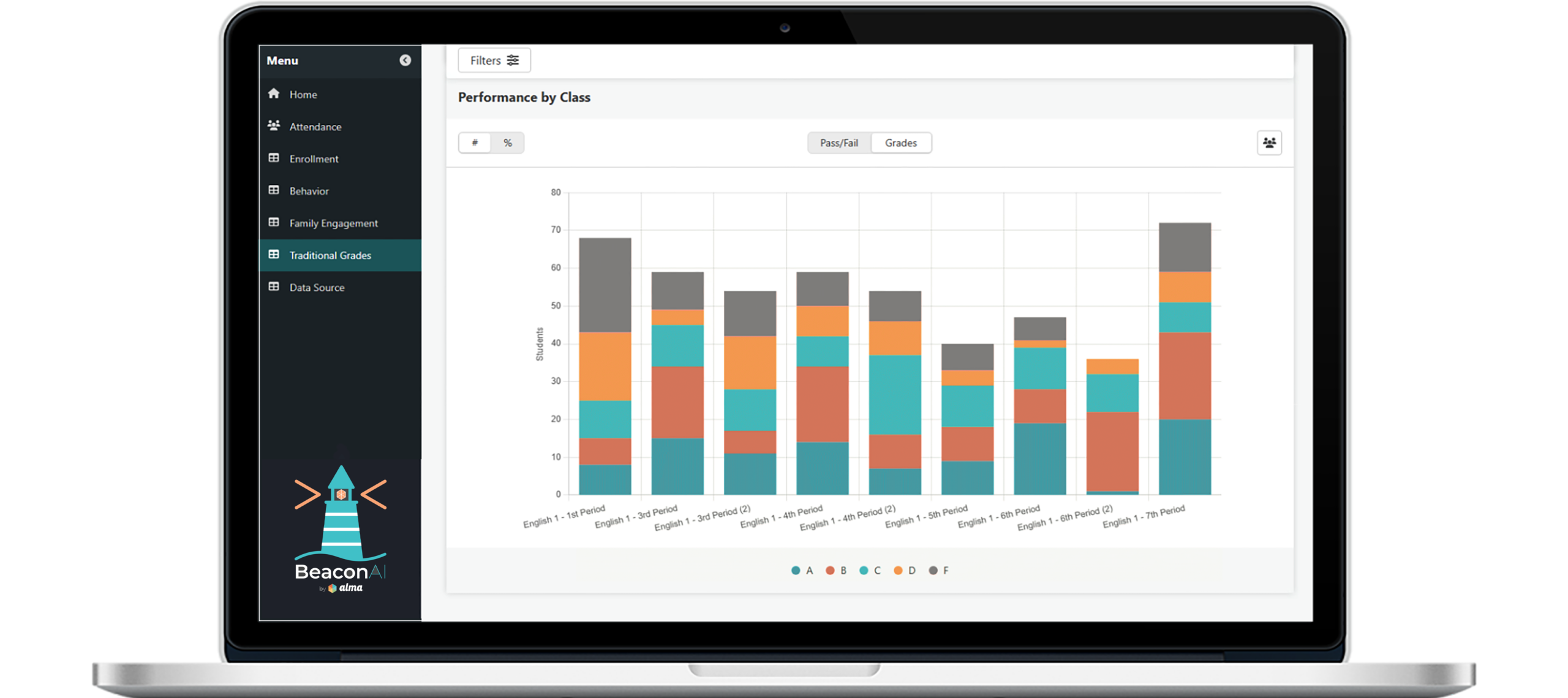
Alma also provides build-your-own reporting, custom reporting, data visualizations, and business intelligence connections. BeaconAI extends that visibility by helping district teams recognize patterns across attendance, enrollment, grading, family engagement, incidents, and other critical information.
Less time wrestling with data means more time using it to support district priorities.
See Alma’s connected SIS capabilities.
How does Alma reduce training and support demands?
Complicated systems create hidden work.
They require extensive training, generate more support requests, and make districts overly dependent on a small group of expert users. When one of those employees changes roles or leaves the organization, valuable system knowledge often leaves with them.
Alma combines sophisticated district capabilities with an interface designed around the people completing the work.
Information is easier to find. Routine responsibilities are easier to complete. New employees can become confident more quickly, while experienced administrators still have access to powerful configuration, reporting, and data management tools.
Alma also provides onboarding, in-app support, help documentation, training videos, and an online resource library to support adoption throughout the organization.
Across a large district, every avoided workaround, unnecessary click, and preventable support request gives time back to staff.
Usability is not a cosmetic benefit at this scale. It is operational infrastructure.
How does Alma connect with existing district technology?
A large school district relies on an entire ecosystem of technology.
Assessment, finance, communication, learning management, transportation, food service, identity management, and other essential systems all depend on accurate student information.
When those systems do not communicate effectively, employees become the integration. They reenter data, reconcile conflicting records, and manually move information from one platform to another.
Alma supports a connected district technology environment through its App Center, public APIs, OneRoster, Google Classroom, Canvas, Schoology, Microsoft Teams Grade Sync, and more than 125 preconfigured integrations.
This allows the SIS to serve as the reliable center of the district’s technology ecosystem instead of becoming another system teams must work around.
Explore Alma’s App Center and integrations.
How does Alma ease state reporting pressure?
Large districts carry significant reporting responsibilities. Information must move accurately between classrooms, schools, district offices, technology partners, and state agencies.
Alma supports state reporting through state-specific fields, validations, data dictionaries, reporting tools, and dedicated state expertise. These capabilities help districts identify issues earlier, reduce repetitive corrections, and improve confidence in the information they submit.
Alma’s acquisition of ESP Solutions Group also adds more than 30 years of expertise in statewide data collection, validation, interoperability, information governance, and reporting.
This expanded expertise supports Alma’s long-term vision of a more connected education platform, end-to-end from student to state.
Read about Alma’s acquisition of ESP Solutions Group.
Can Alma support large and complex education organizations?
Yes. Alma serves PreK-12 schools and districts of every size, including large, multi-school organizations.
Alma supports education organizations serving more than six million students. Its footprint spans 44 states and 61 countries, bringing together modern technology and deep education data expertise.
That scale is supported by district-focused capabilities including centralized oversight, configurable operations, multi-school administration, embedded analytics, integrations, data management, state reporting, enrollment, communication, attendance, scheduling, academics, and family engagement.
Large districts should not have to accept outdated technology simply because legacy platforms have traditionally been considered the only enterprise options.
Why does ease of use matter more in a large district?
Every unnecessary step is multiplied by the number of people expected to complete it.
A confusing attendance workflow affects teachers across every building. A difficult reporting process consumes time across multiple departments. A complicated family portal creates questions for front offices throughout the district.
When an SIS is intuitive, the benefit scales too.
Educators spend less time navigating software. Administrators complete routine work more efficiently. Technology teams receive fewer preventable support requests. Families gain clearer access to the information they need.
Sophistication should reduce complexity, not export it to the user.
Enterprise capability without enterprise pain
Large school districts should not have to choose between powerful technology and technology people can actually use.
Alma delivers the centralized visibility, configurability, data expertise, integrations, reporting, and multi-school management complex education organizations require, within an experience designed to make everyday work more manageable.
Because as a district grows, its impact should grow with it.
Its administrative burden should not.